


StaffTraveler
StaffTraveler Solutions B.V.
When I travel on a staff ticket, the hardest part is often not finding a route but judging whether there will actually be a seat. StaffTraveler is built for that very specific problem. It is a free Travel & Local app from StaffTraveler Solutions B.V. that lets airline employees and eligible travelers check flight loads through a community-based workflow instead of relying on guesswork at the airport.
I approached it as a practical travel tool rather than a normal flight-search app. It does not replace a booking service, a route planner, or an airline’s own check-in system. Its value appears earlier, when I need to decide whether a non-revenue journey is sensible, whether I should keep a backup route ready, or whether changing the departure day could make the trip less stressful.
The app has been available since June 13, 2016, and its current version is 3.24.0. It has passed the hundred-thousand-install mark and holds a 4.7 average from around 4.2 thousand ratings, which gives it a strong reputation among its intended audience. Those figures do not make every load estimate reliable, but they do suggest that the service has become a familiar part of staff-travel routines.
What StaffTraveler is really useful for
The central idea is simple: request a flight-load update, then use that information to make a better non-revenue travel decision. In practice, the important distinction is between planning confidence and a guaranteed seat. A favorable load report can improve my odds, but it does not turn standby travel into a confirmed reservation.
That distinction matters because staff travel has several moving parts. A flight can look comfortable earlier in the day and become less attractive after new bookings, operational changes, or other staff travelers enter the picture. I therefore see the app as a decision aid that works best when I check close enough to departure to be useful while still leaving time to consider alternatives.
Related News

Why WhatsApp Messenger Still Makes Everyday Communication Feel Easy

Jurassic World: The Game Is the Better Dino Tycoon for Strategic Players

Threads in Real Life: Who Should Join, Lurk, or Leave

How SHEIN Turned Shopping Into an Endless Content Feed

How to Make Fortnite Feel Smarter on Mobile

Should You Switch to Microsoft Outlook on Mobile?
A realistic example is a weekend trip where I have two possible departures. The first flight leaves at a convenient time but appears busy. The second requires an earlier start and a longer wait at the destination, yet has a more encouraging load report. Rather than choosing only by timetable, I can compare the likely risk against the inconvenience of the backup. That is the kind of small decision where the app earns its place.
It is also helpful before I leave home. I can examine the possible flights, identify a route with more than one departure, and avoid building an entire itinerary around a single optimistic assumption. For staff travelers, that preparation can be more valuable than a polished interface because the real cost of a missed flight is often a chain of delays, extra transport, and uncertain accommodation.
A focused tool instead of a general travel planner
People who normally buy confirmed tickets may find the app too narrow. A regular flight-search service is better for comparing fares, baggage rules, schedules, connections, and payment options. StaffTraveler is aimed at the moment when the traveler already has access to staff or non-revenue travel and needs information about availability rather than a retail ticket.
Gallery
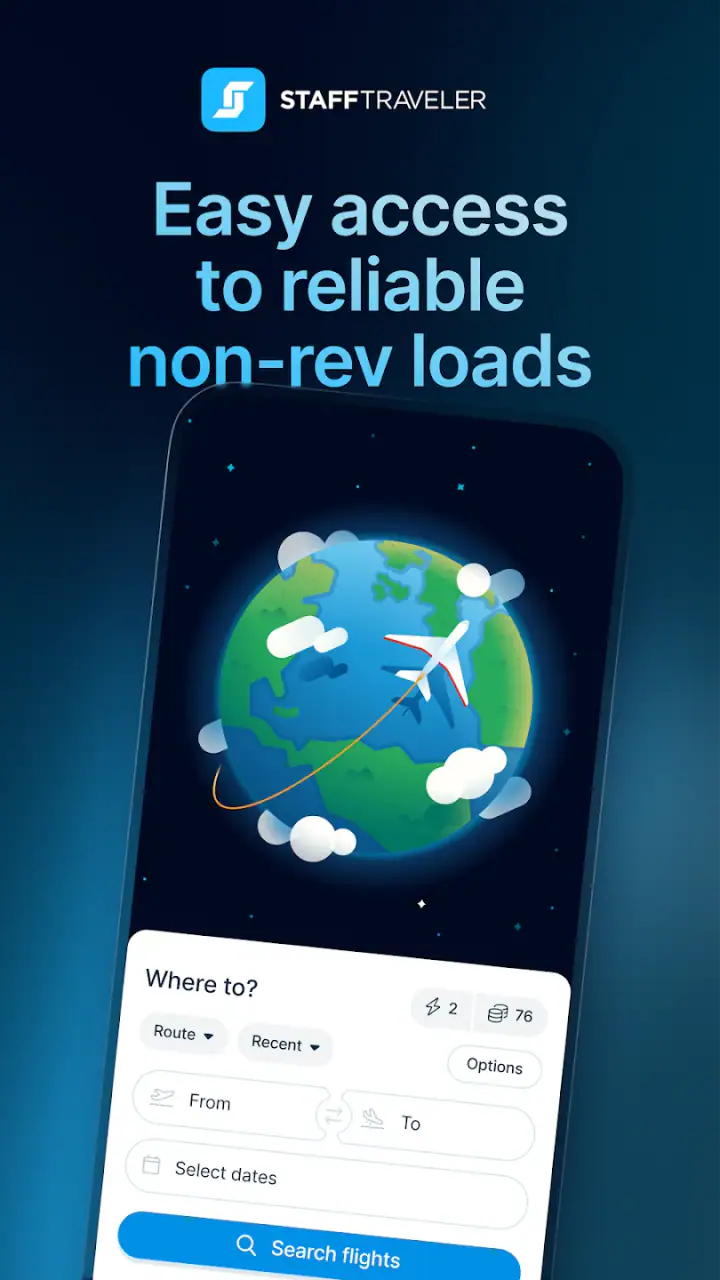
I would not install it expecting destination inspiration or a complete trip organizer. Its strength comes from staying close to one difficult question: “How realistic is this flight for me?” That focus keeps the app relevant for airline staff, eligible companions, and others who regularly use standby arrangements, but it also means casual vacation travelers may have little reason to open it.
The developer, StaffTraveler Solutions B.V., has positioned the product around that specialized audience. The store summary describes non-revenue travel as simpler and emphasizes fast flight-load checks. In my view, the more useful interpretation is not speed alone; it is reducing the number of separate conversations and last-minute decisions needed before attempting a flight.
Trust begins with the limits of a load report
Trust is especially important here because the information can influence expensive and time-sensitive choices. I treat every result as an indication to consider, not as a promise. Even a clear-looking answer should be combined with the airline’s staff-travel rules, the applicable priority system, connection requirements, and a backup plan.
This is where honest expectations matter. The app can make a decision better informed, but it cannot remove the uncertainty built into standby travel. A user who wants certainty should buy a confirmed ticket or use the airline’s official booking route when that is the better fit. A user who accepts some risk and wants a faster way to assess that risk is much more likely to appreciate the app.
I also recommend checking the timing of a report before acting on it. An older response may be useful for spotting a pattern, but I would be cautious about treating it as a current picture. The practical habit is to use the result as one input, then check the flight again when the departure decision becomes real.
Account controls and visible choices
Because this is not a generic public flight tracker, the account side deserves attention. The app is most useful when the traveler can identify the relevant staff-travel context and request information in a way that matches their eligibility. I would take a moment during setup to read each screen carefully, confirm what I am submitting, and avoid entering details that are not needed for the immediate request.
That is not busywork. A specialized service can involve information connected with employment, airline affiliation, or travel eligibility, so I prefer a deliberate setup over quickly accepting every prompt. The important trust signal is not simply whether an app asks for an account; it is whether the user can understand the purpose of each step and make an informed choice before continuing.
My practical recommendation is to keep control of the account from the beginning. Use a password you do not reuse elsewhere, review the profile details occasionally, and remove outdated information when it is no longer relevant. If another person is traveling under an arrangement connected to your account, double-check the traveler details before submitting a request. A small mistake at this stage can make a correct load answer less useful.
The app is free to download, which makes trying the workflow relatively easy. It also includes in-app purchases ranging from $0.99 to $49.99 per item. I would not assume that every user needs to spend money immediately. Before paying for anything, I would first understand which part of the workflow is available without payment, what a purchase unlocks, and whether the expected value matches how often I travel standby.
That pricing range is particularly relevant for occasional users. Someone who checks loads several times a month may see more value than a traveler who takes one non-revenue trip each year. I would approach purchases as a convenience decision, not as a way to buy certainty. No payment should be interpreted as a guarantee that a seat will be available.
Handling information at sensitive moments
There are two moments when I would be especially careful: while requesting a load update and while making a final travel decision. During the request, I would verify the airport pair, flight number, date, and traveler context before submitting. A single wrong field can produce an answer that looks useful but applies to a different journey.
At the decision stage, I would avoid sharing a screenshot or load result more widely than necessary. A report may be useful to the person coordinating the trip, but it can also contain context that does not belong in a public group. Keeping the result within the relevant travel conversation is a sensible habit, particularly when the trip involves employment-related eligibility.
I also would not use the app as a substitute for official operational information. Weather, aircraft changes, delays, staff priority, and airport procedures can all affect the outcome. The responsible workflow is to use the app for its specific insight, then confirm the practical details through the appropriate airline or airport channel.
One non-obvious advantage is that this separation makes the app easier to use responsibly. I do not need to force it to answer every travel question. I can use it for the load picture, use an airline source for rules and check-in, and use a normal map or booking app for ground transport and confirmed alternatives. Keeping those roles separate reduces the chance of treating one convenient screen as the whole travel plan.
How I would build a safer standby workflow
My preferred routine starts with a short list of candidate flights rather than one favorite. I check the most practical option, compare it with at least one later or earlier alternative, and note what happens if the first attempt fails. That backup may be another flight, a different airport, or a confirmed ticket if the trip is important enough.
I also consider the destination side. A flight that technically works may still be a poor choice if it arrives too late for a connection, hotel check-in, work shift, or public transport. The app can inform the seat-risk part of the decision, but I still need to judge the whole journey. This is an important trade-off: the flight with the best apparent load is not automatically the best itinerary.
Another useful habit is to avoid checking only when I am already at the airport. Earlier research gives me room to change plans, while a last-minute check leaves fewer options if the result is disappointing. I would rather use the app to narrow my choices before departure and then recheck the most promising option than discover the problem after passing through the terminal.
For a family or group, I would be even more conservative. One traveler may be able to accept a different flight, but a group can be harder to place together. I would therefore compare the convenience of traveling together with the possibility of splitting across departures, and I would make sure every traveler’s details are entered correctly. StaffTraveler can support the information-gathering step, but the human decision about group flexibility remains mine.
Where the experience can feel less comfortable
The biggest limitation is not necessarily the interface; it is the uncertainty of the underlying travel situation. Users who expect live, guaranteed inventory may feel frustrated even when the app is working as intended. A load report is valuable precisely because standby travel is uncertain, but that also prevents the experience from feeling as definitive as a normal booking app.
There is also a learning curve for newcomers. Terms, eligibility rules, and staff-travel priorities can be unfamiliar, and a first-time user may not know how much weight to give a particular report. I would recommend that new users learn the relevant airline procedure separately and ask an experienced colleague for context rather than relying on the app alone.
The purchase model may create another point of hesitation. Since the app is free but offers paid items, I would inspect the purchase screen carefully and decide whether the feature or allowance being offered actually fits my travel pattern. For frequent users, paid access may be reasonable; for rare travelers, the free entry point may be enough to decide whether the service belongs in their routine.
Finally, this is not the right choice for someone who wants a complete privacy-neutral travel experience without creating an account or sharing any eligibility-related information. The app’s purpose depends on a particular staff-travel context, so users should read the visible account and privacy choices carefully and proceed only if they are comfortable with the information required for that function.
Who should use it, and who should skip it
I would recommend StaffTraveler to airline employees and eligible travelers who regularly make non-revenue journeys and need a quicker way to assess flight loads. It is especially useful for people who frequently compare several departures, travel on busy routes, or need to decide whether a standby attempt is worth the risk before leaving home.
It can also suit experienced staff travelers who already understand the rules but want a more organized checking routine. The app does not replace judgment; it helps put a relevant piece of information closer to the decision. That makes it more valuable for someone who already knows how to interpret uncertainty than for someone looking for a guaranteed answer.
I would skip it if I only take ordinary confirmed-ticket holidays, if I need fare comparison and booking in one place, or if missing the flight would create serious consequences and I cannot afford a backup. In those cases, an airline’s confirmed booking channel or a conventional travel app is the better tool. The alternative is not “less advanced”; it is simply better matched to a different kind of trip.
It is also a poor fit for anyone unwilling to verify account details, review purchase choices, or maintain a backup plan. The app can streamline research, but it cannot make a risky itinerary risk-free. That boundary should be clear before installing it.
My verdict after looking at the whole workflow
StaffTraveler succeeds because it concentrates on a real pain point rather than trying to become an all-purpose travel app. The free download, focused purpose, strong 4.7 average, and established presence make it an appealing starting point for the staff-travel community. Its age rating is Everyone, and the current 3.24.0 release shows that it remains an actively maintained option for its niche.
My recommendation comes with one condition: use it as a planning instrument, not a promise. Check the right flight, confirm the date and traveler details, understand the relevant airline rules, protect sensitive information, and keep an alternative ready. Those habits do more for a successful journey than any single load result.
For the right user, the real benefit is better control over uncertainty. I would keep it on my phone if I regularly traveled standby, especially when comparing multiple departures or deciding whether to leave home for a busy flight. I would not recommend paying for extras without first understanding their value, and I would not rely on the app alone for a high-stakes connection.
In short, StaffTraveler is a specialized, practical companion for people who already live with non-revenue travel. It is not a replacement for confirmed booking tools, official airline guidance, or personal judgment. Used with those safeguards, it can turn a vague airport gamble into a more informed choice, which is exactly the kind of modest but meaningful improvement a focused travel app should provide.
FAQs for StaffTraveler
What is StaffTraveler, and who can use it?
StaffTraveler is a travel app designed mainly for airline employees, crew members, and eligible industry travelers who need up-to-date information about flight loads before traveling on standby. After creating an account, users can search routes and request load information from other verified airline staff. Access may depend on your airline employment status, staff-travel eligibility, and the verification details requested during registration.
How does StaffTraveler provide flight-load information?
The app relies on a community of airline employees who share available-seat information for flights they can access through their staff-travel systems. You select a flight and submit a request, then another verified user may provide the latest load details. Because the information is user-submitted and can change quickly, it should be treated as guidance rather than a guaranteed seat or official airline confirmation.
Does StaffTraveler guarantee that I will get a seat on my flight?
No. StaffTraveler cannot guarantee boarding, a confirmed seat, or successful standby travel. Flight loads may change because of new bookings, cancellations, operational disruptions, weight restrictions, deadheading crew, or airline-specific boarding priorities. Even when the app shows favorable availability, you should check your airline’s official staff-travel system and be prepared with alternative flights, routes, or accommodation if necessary.
Is StaffTraveler free to download and use?
StaffTraveler can generally be downloaded from the relevant app store, but some features may involve credits, in-app purchases, or account-based usage limits. The exact cost and availability of requests can change, so it is important to review the current pricing shown in the app before submitting a query. Also check whether your airline or staff-travel program provides credits or special access.
What information do I need to register and use StaffTraveler?
You normally need to create an account and provide information that confirms your connection with an airline or the aviation industry. Depending on the verification process, the app may request employment-related details, an airline identifier, or other proof of eligibility. Users should enter accurate information, review the privacy policy, and avoid sharing confidential booking, employee, or travel credentials unnecessarily.
Pros
- Provides real-time non-rev seat availability from airline employees.
- Supports many airlines and airports in one convenient app.
- Lets users request loads before committing to travel plans.
- Clear flight details help compare alternative routes quickly.
- Useful for standby travelers who need current operational insight.
Cons
- Availability data depends on timely updates from participating staff.
- Coverage may vary significantly between airlines and routes.
- Some features require payment or an active subscription.
- Seat counts are estimates and cannot guarantee boarding.
- The app is less useful for travelers with confirmed tickets.


